


No products in the cart.

Why Hyderabad Homeowners Should Finalize Aluminium Windows Before Interior Planning
Many homeowners finalize wardrobes, sofas, wall panels, and lighting before they finalize windows. That is like designing a home without deciding how light, air, heat, and views will enter it.
Window selection means deciding the window type, size, frame system, glass, finish, opening style, performance needs, and installation approach. It should happen during architectural and early interior planning, not at the end.
In Hyderabad homes, this is especially important because windows affect heat, dust, noise, privacy, natural light, balcony use, furniture layout, curtain planning, and AC efficiency.
For architects and interior designers, windows are not just civil or vendor items. They are design anchors. For homeowners, early window planning can prevent expensive mistakes and improve everyday comfort.
A premium interior can lose its impact if the windows are poorly selected.
Windows Decide the First Feeling of a Room
Before anyone notices the sofa fabric or wall color, they feel the room.
Is it bright or dull?
Hot or comfortable?
Open or boxed in?
Peaceful or noisy?
Private or exposed?
A large part of that feeling comes from the windows.
A living room with harsh glare may feel uncomfortable even with expensive furniture. A bedroom facing a busy road may not feel restful even with premium bedding. A dining area with poor ventilation may feel heavy. A balcony opening with bulky frames may reduce the sense of space.
This is why window planning should happen before interior styling.
Interiors can beautify a room, but windows decide how the room behaves.
Furniture Layout Depends on Window Placement
Furniture and windows are deeply connected.
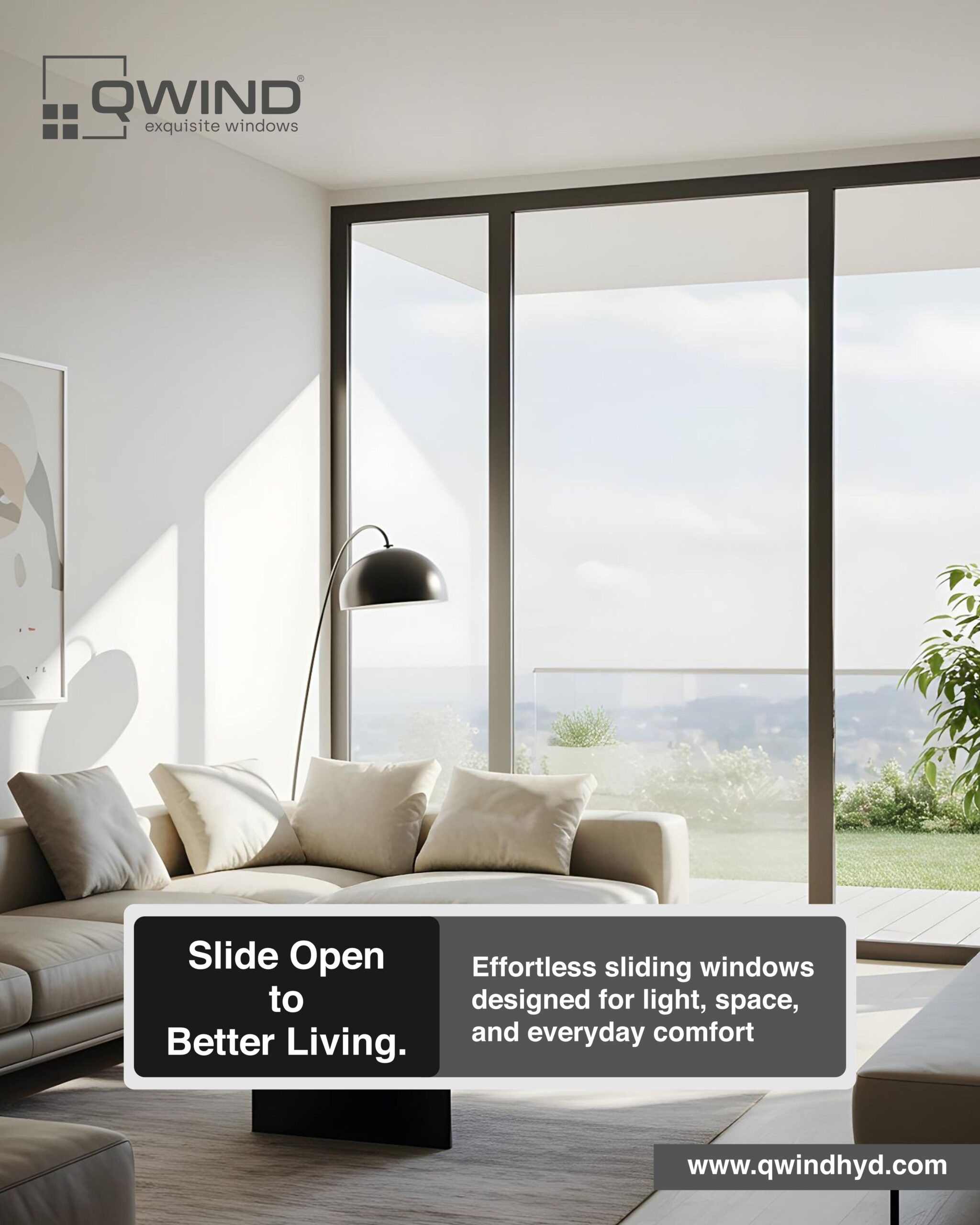
A large sliding window may become the natural focal point of a living room. The sofa may face the view. A reading chair may be placed near the light. A dining table may be positioned to enjoy natural brightness.
But if windows are finalized late, problems appear.
The TV may face glare.
A bed may sit against a noisy window.
A wardrobe may block daylight.
A study table may receive harsh afternoon heat.
A curtain may clash with a side table.
In Hyderabad apartments, where room sizes and balcony openings need careful planning, these issues are common.
When aluminium window selection happens early, the interior designer can plan furniture around real light, view, ventilation, and privacy conditions.
Curtain and Blind Planning Needs Window Clarity
Curtain planning is one of the biggest reasons to finalize windows early.
The window type affects curtain depth, track placement, blind selection, pelmet design, ceiling recess, and wall finishing.
Sliding windows may need one kind of curtain solution. Casement windows may need another. Large fixed glass may need sheer and blackout layering. Balcony openings may need full-height curtains. Bedrooms may need better light control.
If the window size, frame depth, or opening style changes after the false ceiling is done, the curtain detail may become awkward.
This is especially important in luxury Hyderabad interiors where ceiling-recessed curtains, wall paneling, and clean lines are common.
A good curtain detail looks effortless only when the window is planned first.
Better Windows Protect Premium Interiors
Premium interiors are an investment. Windows help protect that investment.
Poor window sealing can allow dust to settle on wardrobes, fabrics, sofas, TV units, kitchen shutters, and wall panels. Heat can make rooms uncomfortable and increase AC usage. Moisture leakage can damage paint, flooring, and woodwork. Noise can reduce the peaceful feeling of bedrooms and home offices.
Aluminium system windows with proper sealing, drainage, glass, and installation reduce these risks.
This matters in Hyderabad because many premium projects are located in areas with ongoing construction, traffic, dust, and strong sun exposure.
A beautiful interior needs a strong outer boundary. Otherwise, the interiors keep fighting the outside environment.
Common Mistake: Thinking Frame Color Is the Main Decision
Many homeowners think window selection means choosing black, grey, white, or bronze frames.
Frame color matters, but it is only one part of the decision.
The more important questions are:
Which window type suits the room?
Does the glass suit the direction of sunlight?
Does the system reduce dust and noise?
Will the opening style affect curtains?
Does the frame proportion suit the elevation?
Is the installation team experienced?
Will the window support long-term maintenance?
A slim black window may look premium, but if it brings too much heat into a bedroom, it will not feel premium in daily life.
Good window selection is about performance and design together.
A Simple Window-First Planning Method
Architects, designers, and homeowners can use a simple method before starting interiors.
First, identify the room’s function. Is it for sleeping, working, cooking, relaxing, entertaining, or utility?
Second, identify the main window requirement. Is it view, ventilation, privacy, heat control, dust control, noise reduction, or access?
Third, study the direction. Does the window face west, east, road, garden, balcony, or neighboring building?
Fourth, choose the opening style. Sliding, casement, fixed, ventilated, or a combination.
Fifth, coordinate with interiors. Check curtains, blinds, furniture, AC, lighting, wall panels, and electrical points.
This process avoids last-minute compromises and helps the home feel more finished.
Real-World Example
A homeowner in Narsingi had already finalized interior layouts, including a TV wall, ceiling-recessed curtains, and wardrobe positions. Window selection was left for later because it seemed like a standard construction decision.
When the window consultant visited the site, several issues appeared. The living room window faced strong afternoon glare directly toward the TV. The curtain recess was too narrow for the selected sliding system. The bedroom needed better noise control because it faced a busy road. One wardrobe position was also blocking useful daylight.
The team had to revise the curtain detail, adjust the furniture layout, change glass specifications, and rework part of the ceiling plan.
The home still turned out well, but the process became more expensive and stressful than necessary.
If the windows had been finalized earlier, most of these changes could have been avoided.
Actionable Exercises
The Window-First Room Plan
Before finalizing interiors, mark every window in the room and write its purpose: light, view, ventilation, access, privacy, or comfort.
The Conflict Check
Ask: “Will this window create problems with curtains, furniture, AC, lighting, privacy, or daily movement?” Solve those conflicts before interior work begins.
Practical Takeaways
- Aluminium window selection should happen before detailed interior planning.
- Windows affect furniture layout, curtains, lighting, AC efficiency, privacy, and comfort.
- Hyderabad homes need early planning because of heat, dust, noise, and large balcony openings.
- Frame color is only one part of the decision; performance matters equally.
- A window-first approach prevents costly changes and improves the final home experience.
CTA
Planning interiors for a Hyderabad apartment, villa, or premium home? Finalize your aluminium system windows early with Qwind Hyd to create a cleaner, more comfortable, and better-coordinated design.